



If tugging on a pair of regular underwear has turned into a daily wrestling match, you are not the problem. Standard underwear was designed for bodies that bend, twist, and stand on one leg without thinking twice. Adaptive underwear is designed for every other morning.
Here’s what it actually is, who it helps, and how to pick a pair that works for your body and your life.
What Is Adaptive Underwear?
Adaptive underwear is underwear that’s been redesigned to be easier to put on, take off, and wear, usually through alternative closures, smarter seaming, and thoughtful fabric choices.
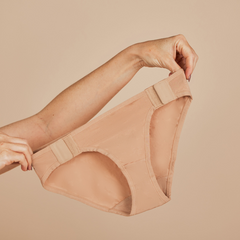
Instead of asking you to bend, balance on one leg, or wrestle an elastic waistband past your hips, adaptive panties might open at the side with magnets, fasten with snaps, or tear away at the hip.
The short version: traditional underwear asks your body to do a lot of small, precise movements at once. Adaptive underwear asks less of you and still fits, still covers, and still looks like underwear.
You’ll hear it called a few different things: adaptive panties, adaptive underwear for women, or sometimes special needs underwear. They all refer to the same idea.
Who Adaptive Underwear Is For
Adaptive underwear isn’t niche. It’s just under-marketed. The women who benefit most include:
-
Women recovering from surgery — especially hip, abdominal, back, and shoulder surgeries, where bending and lifting are restricted for weeks.
-
Women with chronic conditions that cause fatigue, joint instability, or flare-ups. Multiple sclerosis, fibromyalgia, Ehlers-Danlos Syndrome, and post-stroke recovery all fall here.
-
Wheelchair users and women on bed rest, where dressing happens seated or lying down.
-
Pregnant women in the third trimester, when bending over stops being reasonable.
-
Women with sensory sensitivities, who need smoother seams and softer fabrics than mainstream underwear typically offers.
-
Caregivers and the people they support. Adaptive underwear makes dressing faster, less painful, and more dignified on both sides.
If even one of those describes your morning, adaptive underwear may save you more time and frustration than you expect.

Types of Adaptive Underwear by Closure
Most adaptive underwear is defined by its closure, that’s the part doing the real work.
Designers are finally paying attention to the real preferences of real people, and adaptive intimates are getting a well-deserved style upgrade.
Adaptive Support Doesn’t End With Underwear
Side-Opening (Magnetic or Snap)
Side-opening panties fasten at one or both hips, so you never have to step in or pull up. You can put them on while seated, lying down, or in a wheelchair. For women with hip, knee, or back limitations, this is often the easiest category to wear.
Within side-opening, the closure can be magnetic, snap, or tie-side. Magnets are the gentlest on hand function, they pull themselves into place, no grip required.
Snaps ask for more precision and pinch strength, so they can be harder with arthritis or tremor. Tie-side is the most adjustable but also the slowest.
Snap-Closure
Snap-closure panties have been a staple of medical supply catalogs for decades. They work, they’re familiar to care teams, and they’re widely available.
They do require enough hand strength to line up and press the two halves of the snap together, which isn’t trivial if you have joint pain or nerve issues.
Button-Up or Clasp
Button-up and clasp panties are rarer but still out there, particularly in post-partum and maternity lines. The trade-off is the same as snaps: they work if your hands work, and they stop working at the moment your hands don’t.
Tear-Away or Velcro
Velcro closures show up in some adaptive underwear, especially for incontinence or acute post-op care. They’re fast and strong. The downside is noise and the way Velcro picks up lint over time.

How to Choose the Right Adaptive Underwear
Start with the part of your body that’s giving you the most trouble, then match the closure to it.
If your hands are the issue, whether you have arthritis, tremor, post-stroke or neuropathy, a magnetic side closure takes the least effort. If your hips or back are the issue, any side-opening design beats stepping in.
If you’re dressing someone else, side-opening styles are typically the gentlest for the person being cared for.
A few other things matter more than they sound:
-
A 100% cotton gusset. Your skin deserves breathable fabric, full stop.
-
OEKO-TEX Standard 100 fabric. This means the fabric has been tested for harmful substances. It’s worth looking for, especially if your skin is sensitive.
-
Tagless labels and flat seams. Scratchy tags and bulky seams are a small detail until they aren’t. For women with sensory sensitivities, they’re non-negotiable.
-
Size range. Adaptive brands vary wildly on sizing. Check that yours is carried before you fall in love with the design.
The goal isn’t to find the most “adaptive” pair. It’s to find the one that takes the most friction out of your actual morning.
Is Adaptive Underwear Worth It?
Is adaptive underwear covered by HSA or FSA?
Adaptive underwear can be covered by a Health Savings Account or Flexible Spending Account when it’s medically necessary, which it often is for women managing arthritis, post-surgery recovery, or a diagnosed mobility condition.
Springrose products are FSA/HSA eligible through a partnership with Flex. You can pay with your FSA or HSA card at checkout.
How long does adaptive underwear last?
A well-made pair lasts as long as quality standard underwear, usually 12 to 18 months of regular wear. Magnetic closures are particularly durable because there are no moving parts to wear out.
Snaps and Velcro may have shorter lifespans; check the care instructions and hand wash when possible.
Can I wear adaptive underwear every day?
Yes. Most adaptive underwear is designed for daily use, not just recovery periods. Many women who try it for surgery recovery keep wearing it afterward because it’s simply easier. No going back.
The Springrose Approach to Adaptive Underwear
Our Adaptive Underwear uses a side-magnet closure with two adjustment points on each hip. You can fasten it one-handed, while seated, or lying down. The cut is bikini with medium coverage. The outer fabric is OEKO-TEX Standard 100 certified. The gusset is 100% cotton. The labels are printed, not sewn in.
Sizing runs XXS through 3XL, a wider range than most adaptive brands carry.
Two design choices worth flagging. We chose magnets over snaps because pinch grip is the thing most likely to fail first, whether from arthritis, neuropathy, or a long day.
And we chose side-closure over tear-away because side-closure keeps the underwear looking and wearing like regular underwear, not like a recovery product.
Getting Dressed Shouldn’t Be the Hardest Part of the Day
The underwear you put on in the morning shouldn’t be the thing that decides how your day starts. If standard underwear has turned into a twice-daily workaround, for you or for someone you care for, there’s a simpler design, and it’s been hiding in a corner of the market that’s finally getting the attention it deserves.
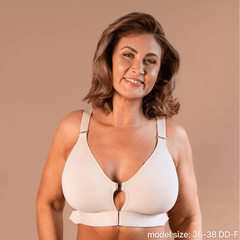
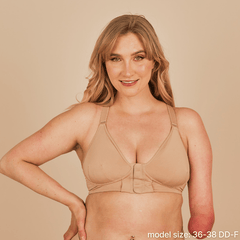
If you’re ready to try a pair that opens at the side with magnets, shop the Springrose Adaptive Underwear. And if the full adaptive wardrobe is on your mind, our Easy-On Mobility Bra and Goddess Lift Mobility Bra use the same front-closure logic for the top half.
